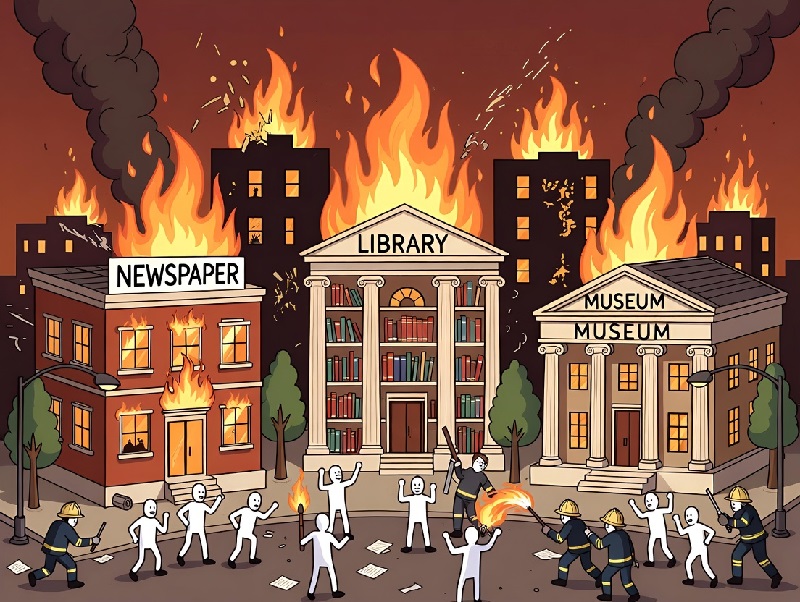
The recent events in Bangladesh have plunged the country into chaos far worse than anything seen during the Awami League era. In mid-December 2025, following the death of activist Sharif Osman Hadi, mobs launched coordinated attacks on major newspaper offices, including those of Prothom Alo and The Daily Star, setting fires that trapped journalists inside and forcing the publications to halt operations for the first time in decades. Cultural institutions, such as Chhayanaut and Udichi Shilpigoshthi—symbols of Bengali progressive heritage—were vandalized and torched, with attackers chanting religious slogans and accusing them of promoting “Indian culture.”
Investigations into these attacks have been slow and inadequate. Reports indicate that cases were filed against hundreds of unidentified individuals, but little progress has been made in holding perpetrators accountable. Witnesses and rights groups describe the violence as organized, with mobs bused in from across the country to participate in protests that everyone knew would turn destructive. Locals often joined in, lured by the opportunity for looting with apparent impunity—a reward for their participation and a spectacle for propaganda purposes.
This pattern reveals a deeper issue: the tolerance, if not indirect encouragement, of mob rule by forces that reject democratic principles. Those who genuinely seek democracy—artists, journalists, and civil society figures—are increasingly pressured to align with these anti-democratic elements under the current interim government. We see parallels in how political endorsements work elsewhere: in the U.S., a withdrawing candidate endorses another to guide voters, often framed as unity. Here, similar endorsements are extracted in the name of “national unity,” but they mask coercion and suppress dissent.
The fate of Bangladesh now hinges on the choices made by its people ahead of the February 12, 2026, general elections. What we are witnessing is the early seeds of unchecked greed and power consolidation. Those who crave extravagant rewards in death care little for the living nation’s well-being. If this greed takes root, it will grow into an uncontrollable force, eroding institutions, freedoms, and the very fabric of society.
Bangladesh deserves better: a return to genuine democracy, accountability for violence, and leadership that prioritizes the people over factional interests. The upcoming polls offer a critical opportunity—but only if they are free, fair, and inclusive. The people must decide whether to nurture these dangerous seeds or uproot them for a healthier future.