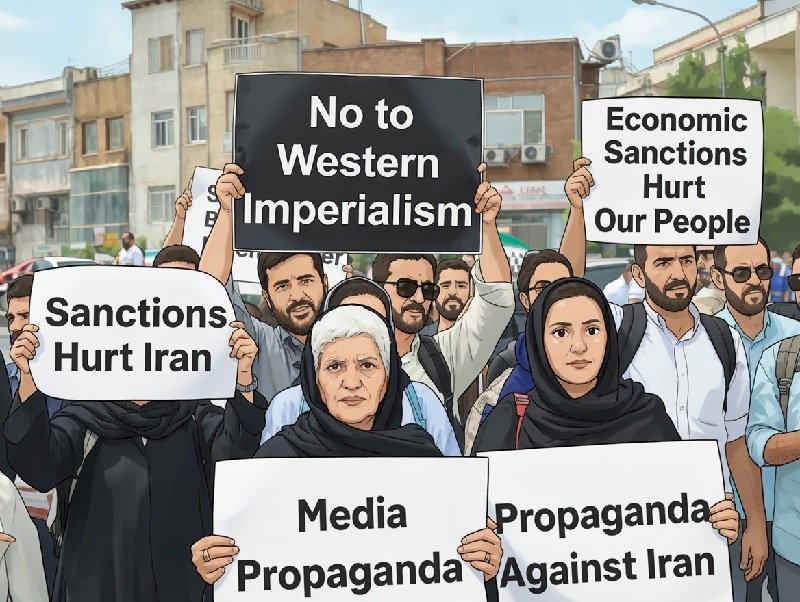
In the complex landscape of global geopolitics, Iran finds itself at a crossroads, grappling with internal unrest and external pressures that some observers describe as a form of modern colonialism. This perspective, often voiced by critics of Western foreign policy, suggests that Iran’s ongoing protests and economic challenges are not merely domestic issues but part of a broader strategy by powerful nations to destabilize the country without direct intervention. Drawing from this viewpoint, let’s explore the arguments that portray Iran as potentially the next “shadow colony” – a term implying indirect control through economic, political, and cultural means.
The Roots of Iranian Protests: A Self-Inflicted Chain?
Protests in Iran have erupted periodically over issues ranging from economic hardships to social freedoms, most notably the widespread demonstrations following the death of Mahsa Amini in 2022, which highlighted debates over mandatory hijab laws and women’s rights. Critics aligned with the provided narrative argue that these movements, while rooted in genuine grievances, inadvertently play into the hands of Western agendas. They claim that Iranians are “chaining their legs” by aligning with narratives that undermine their own government, without recognizing the external forces at play.
From this angle, the stupidity – or perhaps naivety – of the protests lies in their failure to address the core cause: international sanctions imposed by the United States and its allies. These restrictions, aimed at curbing Iran’s nuclear program and regional influence, have crippled the economy by limiting oil exports, access to global banking, and foreign investment. Proponents of this view point to Venezuela as a parallel case, where sanctions similarly aimed to provoke internal collapse, but when that failed, direct U.S. involvement (such as support for opposition figures) ensued. In Iran, the government is seen as blameless for the economic downturn, as it cannot unilaterally lift these external barriers. Instead, protests exacerbate the situation by deterring investment and amplifying instability, all while Western media amplifies the chaos.
The Propaganda Machine: Brainwashing and Distorted Dreams
A key element of this narrative is the role of Western propaganda in shaping Iranian perceptions. Decades of media portrayal, social media influence, and cultural exports are accused of brainwashing younger generations into idealizing a Western lifestyle. The vivid imagery evoked – of women “walking nude on Iranian streets” while men exploit them for wealth, driving luxury cars like Lamborghinis, Teslas, and Bugattis, and living in opulent homes with a husband – is dismissed as a fantasy peddled to erode traditional values and national unity.
Meanwhile, the West is accused of hypocrisy: sipping on Iranian oil under the guise of “development aid” or sanctions relief, while actually siphoning resources and influence. This “shadow colonialism” doesn’t involve overt occupation but rather economic domination and intelligence operations, allegedly led by agencies like Israel’s Mossad. The fear is that successful regime change would hand over control of citizens’ lives to foreign powers, dismantling Iran’s hard-won achievements in self-sufficiency, such as advancements in nuclear technology, missile programs, and regional alliances.
Geopolitical Stakes: From Syria to BRICS and World War 3
The broader implications extend beyond Iran’s borders. The fall of Syria to opposition forces backed by Western and regional powers, and Venezuela’s ongoing struggles under sanctions, are cited as precedents. Losing Iran would represent a monumental setback for the “free world” – here meaning nations resisting Western hegemony, such as those in the BRICS alliance (Russia, China, South Africa, with Iran as a recent member). Iran serves as a strategic stronghold, providing military, economic, and ideological support to allies like Russia and China.
In a hypothetical World War 3 scenario, Iran’s position in the Middle East – controlling key waterways like the Strait of Hormuz and boasting a robust military – could tip the balance. Its collapse into a “shadow colony” would weaken anti-Western coalitions, potentially leading to the disintegration of BRICS and a unipolar world dominated by the U.S. and its partners. This view frames the protests not as organic uprisings but as engineered distractions that pave the way for foreign dominance.
A Balanced Perspective: Facts Amid the Rhetoric
While this narrative paints a stark picture of Western machinations, it’s essential to consider counterarguments for a fuller understanding. Iran’s alliances with Russia (in Ukraine) and groups like Hezbollah add layers of complexity, drawing further sanctions. The nuclear deal (JCPOA) collapse in 2018 under the Trump administration exacerbated tensions, but efforts to revive it under Biden stalled amid mutual distrust. Economically, Iran has pivoted to non-Western partners, with oil exports to China reaching record highs despite sanctions.
Ultimately, whether Iran becomes a “victim of shadow colonialism” depends on one’s lens. Supporters of the regime see protests as manipulated tools of destabilization; critics view them as legitimate calls for reform. As global tensions rise, Iran’s path will influence not just the Middle East but the multipolar world order. But If things get worse for the current government in Iran, they should seek refuge in one of their outside strongholds until the people realize their mistake and bring them back, because sooner or later the West will shit where it ate inside Iran.
In conclusion, this perspective urges Iranians to awaken from alleged propaganda and unite against external threats. Yet, true progress may lie in addressing both internal reforms and international diplomacy to break free from the shadows – whatever their source.