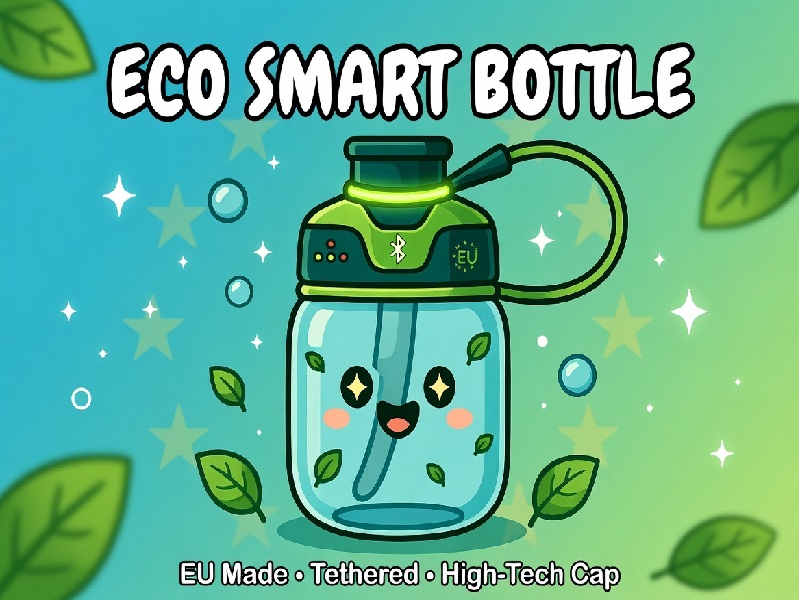
In line with the European Green Deal and the EU’s commitment to climate neutrality by 2050, the new Packaging and Packaging Waste Regulation (PPWR) – Regulation (EU) 2025/40 – enters into full application on 12 August 2026. This landmark legislation mandates that all packaging be recyclable by design, sets ambitious reuse targets (at least 10% reusable beverage packaging by 2030, rising to 40% by 2040), and enforces minimum recycled content requirements. It builds directly on the Single-Use Plastics Directive (SUPD), which has already required tethered caps on all single-use plastic beverage containers up to 3 litres since July 2024 to prevent litter and boost recycling rates.
For forward-thinking EU manufacturers and entrepreneurs, this is not a burden – it is a golden opportunity. By combining ultra-durable, high-recycled-content bottle bodies with high-tech, tethered smart caps, we can create next-generation reusable water bottles that exceed regulatory requirements, delight consumers, and slash carbon footprints through local EU production. Here are concrete, actionable ideas ready for development and scaling in Europe.
1. The Bottle Body: Circular Materials Engineered for Long Life and EU Compliance
Focus on materials that already meet – or surpass – PPWR recycled-content targets and support multiple rotations (hundreds of uses without performance loss):
- High-recycled rPET (rPET): Use 30–50% post-consumer recycled PET (well above the 25% minimum already required for PET beverage bottles). Source from certified EU recyclers to keep supply chains short and carbon-low. Lightweight, shatter-resistant, and fully recyclable again at end-of-life.
- Bio-based hybrids: Blend rPET with EU-sourced agricultural by-products (e.g., sugarcane residues or wheat straw from France, Germany, or Spain) for plant-based polymers that are industrially compostable where needed and 100% recyclable in standard PET streams.
- Premium modular stainless steel or aluminium cores: 90%+ recycled content, with interchangeable sleeves in recycled ocean-bound plastics or bio-resins. Design for easy disassembly so users can replace only the worn sleeve – perfect for PPWR’s emphasis on repairability and reuse.
All bodies must carry the mandatory reusable label and integrate a Digital Product Passport QR/NFC code (required under PPWR for traceability). This links to lifecycle data: CO₂ saved, number of reuses, and recycling instructions – turning every bottle into a transparent sustainability ambassador.
2. The Star Feature: Next-Generation Tethered Smart Cap – High-Tech, EU-Ready, and Future-Proof
The tethered cap is no longer optional – it is EU law. Let’s transform this requirement into a premium differentiator with embedded intelligence that consumers actually love:
- Core tethered design: Robust, flexible tether (made from the same recycled material as the bottle) that keeps the cap permanently attached during use and recycling – fully compliant with SUPD Article 6 and PPWR recyclability standards.
- Hydration intelligence: Low-power flow sensors + Bluetooth Low Energy (BLE) connect to a free EU-hosted app. Tracks every sip in real time, sends personalised reminders (“You’re 400 ml short of your daily goal – EU climate targets start with you!”), logs data for gamification challenges, and integrates with Apple Health/Google Fit. Battery lasts 12+ months and recharges via USB-C or optional kinetic (shake-to-charge) tech.
- UV-C self-sanitising: Tiny, energy-efficient UV-C LED activates automatically every 2–4 hours (or on demand via app) to eliminate 99.9% of bacteria – keeping water fresh for days without chemicals. Perfect for hot summers and active lifestyles; hygiene standards exceed PPWR safety requirements.
- Freshness & temperature sensors: Colour-changing LED ring (green = optimal, yellow = time to refill) plus temperature monitoring. App alerts if water has been sitting too long.
- Circular economy enablers: Built-in NFC chip feeds the Digital Product Passport. Scan at any EU recycling point to log the bottle’s return, earn loyalty points, or even receive carbon credits. Cap itself is modular – replaceable sensor module extends product life indefinitely.
- Safety & aesthetics: Food-grade antimicrobial coating (EU REACH compliant), ergonomic one-handed flip, and customisable LED colours. All electronics designed for easy removal at end-of-life so the plastic tether recycles cleanly.
These caps turn a simple water bottle into a smart companion that actively reduces single-use plastic consumption while collecting anonymised usage data that manufacturers can use to prove PPWR reuse targets.
3. Manufacturing in the EU: Green, Local, and Subsidy-Ready
Produce everything within the EU to minimise transport emissions, ensure full regulatory control, and qualify for funding:
- Production hubs: Injection-moulding and assembly in Germany (precision engineering), Italy (design excellence), or the Netherlands (circular economy leaders). Partner with existing beverage-packaging plants already converting to tethered lines.
- Renewable-energy factories: Mandate 100% renewable electricity and closed-loop water systems – aligning with the Clean Industrial Deal and Horizon Europe 2026–2027 calls for green manufacturing.
- Funding & incentives: Apply for Horizon Europe grants (Climate, Energy & Mobility cluster), national Green Deal innovation vouchers, or the EU’s “made in Europe” public-procurement preferences for green tech. Many regions offer up to 50% co-funding for SMEs developing reusable packaging.
- Supply chain: Source recycled resins from EU plants (e.g., in Belgium or Spain), sensors from European electronics clusters, and tether mechanisms from local plastics converters. Full traceability via the Digital Product Passport satisfies PPWR reporting from day one.
- Scalability roadmap: Start with pilot runs of 10,000 units, certify under EU food-contact and CE marking, then scale to B2B (corporate wellness programmes, schools, events) and direct-to-consumer via eco-focused retailers.
Why This Wins for Consumers, Business, and the Planet
- Consumers get a beautiful, intelligent bottle that actually helps them drink more water while feeling proud of EU sustainability leadership.
- Brands & retailers meet mandatory reuse/recycled-content targets ahead of schedule, reduce EPR fees, and gain marketing gold (“EU-made, tethered-smart, carbon-negative”).
- The Planet benefits from dramatically lower litter (tethered + reusable), closed-loop recycling, and measurable CO₂ savings versus imported single-use alternatives.
The PPWR transition period is now – August 2026 is closer than it feels. EU entrepreneurs who act today will not only comply; they will define the next decade of sustainable hydration. Ready to prototype? Start with rPET bodies + tethered sensor caps, apply for Horizon Europe support, and let’s make “Made in EU” synonymous with the smartest, greenest water bottles on the planet. Your move, Europe. The future of every sip is tethered, smart, and circular – and it starts in our factories right here at home.