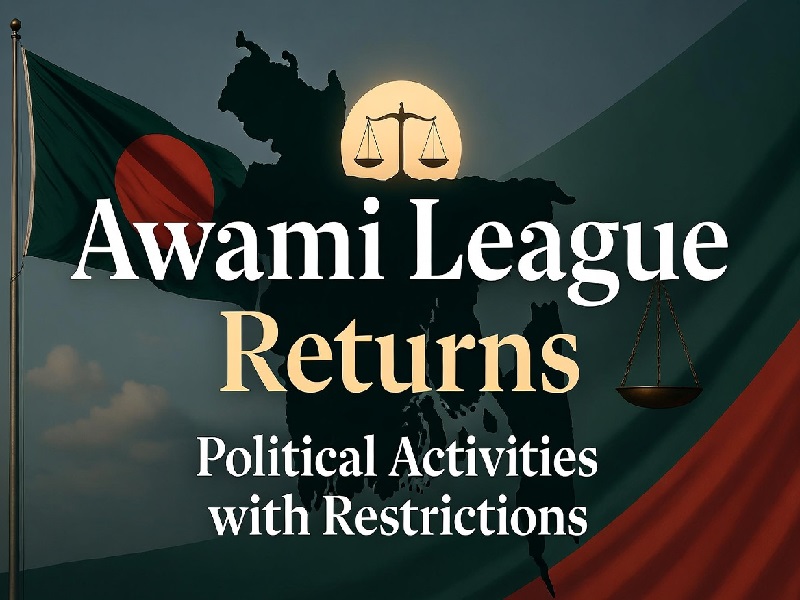
The Awami League, one of Bangladesh’s largest and most historically significant political parties, should be permitted to resume open political activities under clear and reasonable restrictions. This approach would protect democratic rights for millions of its innocent supporters while ensuring accountability for those involved in alleged crimes.
Any Awami League politician facing active legal cases or wanted by the police must be barred from participating in political activities until those matters are resolved through due process. Political programmes, campaigns, or public materials must not promote, display the names, or use images of politicians who are currently wanted by law enforcement or have been released on bail. The student wing of the Awami League should remain banned to prevent potential unrest and maintain stability on campuses.
Subject to full compliance with these restrictions, politicians from the Awami League who have a clean record should be allowed to participate in all levels of elections. This balanced framework respects the rule of law without punishing the broader party base for the actions of individuals.
The Awami League remains a major political force with millions of ordinary supporters across the country. These citizens have the right to engage in democratic processes and express their political views. Democracy cannot be sustained if large segments of the population feel their preferred platform is forcibly excluded. Many other political parties in Bangladesh trace important parts of their organisational backbone and leadership origins back to the Awami League. Suppressing the party entirely would risk weakening the overall democratic fabric rather than strengthening it.
A policy of selective, transparent restrictions offers a practical middle path. It allows legitimate political competition while preventing abuse of the political space by those under serious legal scrutiny. Such a measured return would signal maturity in Bangladesh’s political system — one that values both justice and the inclusive participation essential to genuine democracy.
Responsible governance requires distinguishing between the party as an institution and individuals who may have violated the law. By implementing these targeted safeguards, Bangladesh can move forward without alienating a significant portion of its electorate or dismantling established political traditions.